

The Essentials
This newsletter will focus on those industries providing critical or "essential" services to our country in an effort to demystify their operations, identify the overlaps among such critical infrastructure industries, and how policy makers can better understand and support them.

Mining and Electricity - The Chicken and the Egg
During my tenure with Cong. Sherwood, he prioritized working with the federal Mine Safety and Health Administration (MSHA) and other related agencies to identify priority areas in Pennsylvania for reclamation – an expensive process requiring much federal agency and state coordination. The Surface Mining Control and Reclamation Act of 1977 (SMCRA) mandated the creation of an “abandoned mine land” fund to which all mining operations have contributed since. Nonetheless, just like any fee-based program run by the federal government, funds had to be appropriated and politics were involved in their allocation (shocking!).

Oil & Gas and Electricity - Stepbrothers and Stepsisters
Of course, I should have known that the beginning of the oil & gas sector began well before I thought it did. In this case, and for the first time in the lifetime of The Essentials blog…drumroll please…the Romans are no where to be found. Long before the Romans came into power, humans used naturally occurring asphalt for construction – as long as 4,000 years ago. And then the Chinese dominated early drilling and transporting, starting around 1,700 years ago using simple drills on bamboo sticks and bamboo pipelines to transport unrefined petroleum and siphoned natural gas (not called that until later) for both heating and for the distilling of salt. In the 900s, oil fields were discovered and used near modern Baku, Azerbaijan. A century before that, Persian chemists took the lead in figuring out how to distill solid bitumen into kerosene for heating. Monks in Southern Italy coined the term petroleum to cover both solid and liquid forms that were variously called naphta, asphalt, and bitumen. The gas forms of hydrocarbons were not widely used until after the 1700s, when their modern names came into being -- natural gas or methane gas being the most common.

Agriculture and Electricity - Why is the bread in Europe so much better than in the U.S.?
If I’ve made you hungry, feel free to pause and grab a bite before I go into the history (cue the Jeopardy tune for those who need the break). Okay, now we’re back…from an historical standpoint, the term agriculture refers to the domestication of both plants and animals. While humans have gathered grains, nuts and fruits and hunted animals for food since our origins, the systematic growing of certain foods and gathering together of certain preferred animals to be raised for consumption did not begin until about 13,000-11,500 years ago. Just like with the other developments I’ve discussed previously in this blog, various ancient peoples around the globe domesticated foods independently. The first animals to be raised for food were pigs and sheep, followed by cattle. Eventually, camels and horses were domesticated, but not primarily for food consumption. Cows/oxen were both eaten and used to help cultivate other foods.

Critical Manufacturing and Electricity - The Back Bone’s Connected to the Neck Bone
Manufacturing is the process of turning raw materials or parts into finished goods through the use of tools, human labor, machinery, and chemical processing. It allows businesses to sell finished products at a higher cost than the value of the raw materials used. Large-scale manufacturing allows for goods to be mass-produced using assembly line processes and advanced technologies as core assets.

Communications and Electricity - “The British are coming!”
As you may expect if you’ve read my previous blog, now is when I’ll delve into history a bit. Before machines were invented to help deliver news, information, and intelligence, people did it -- they talked to each other, then walked or ran to deliver messages over longer distances. While unverified, the legend of the Greek messenger Philippides (or Pheidippides), who ran the approximately 26.2 miles from the city of Marathon to Athens to ensure Greek leadership knew of its win against the Persians in the Battle of Marathon, is perhaps the most famous example of a person transporting vital information quickly. Philippides supposedly died from the exertion – a truly heroic effort if true!

Electricity and Transportation
Today, we think of three major modes of transportation: land, sea, and air. This blog will mostly focus on the land element, but will touch on the others because overlaps exist between all three modes of transportation and electricity.
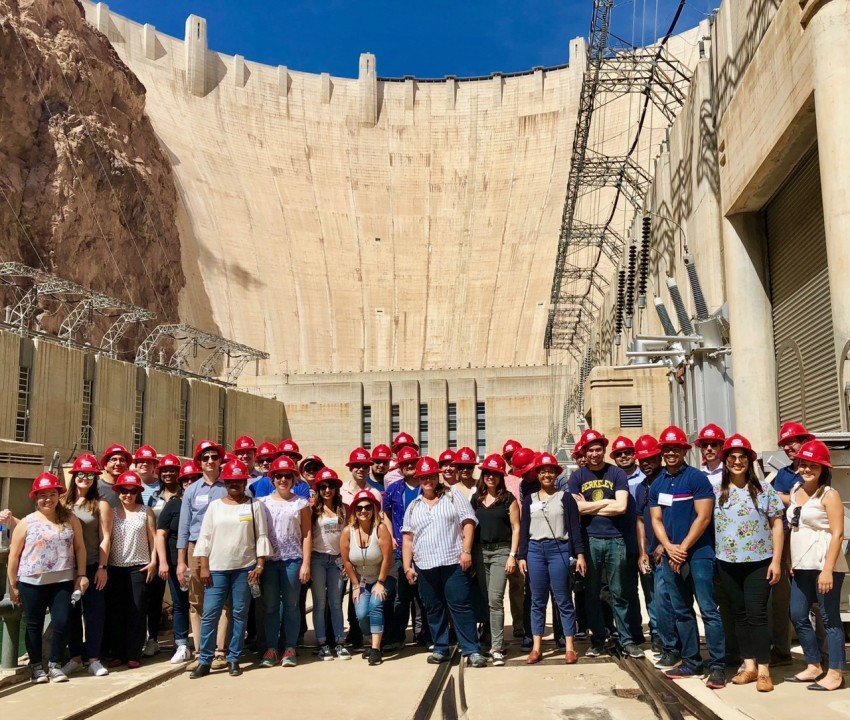
Water and Electricity - Lifeblood and Lifeline
But first, some fun facts about water…and its infrastructure. Aside from a very small amount released into space over billions of years, the same water exists today as was here when the earth was formed. It’s kind of wonderful. Water is the ultimate recyclable. According to a professor at Washington State University, forms of water can be found well below the earth's surface, including in fossil fuels (spoiler alert – first overlap between water and electricity).

Lefty Loosy Righty Tighty
When I was a month away from turning 10, my father, a Marine Corps aviator, died in a plane crash during a routine training flight. Colonel John Ditto was 44 years old and had served for 24 years. He’d served two tours in Vietnam and had had several close calls, but he was such a good pilot that he was the only non-general officer who had, at least up to that point, ever been inducted into the prestigious Early and Pioneer Naval Aviators Association, better known as the Golden Eagles.